Home or Studio Session: Choosing a Setting for a Crowded Week
Compare private at-home and studio sessions in Manhattan. This guide examines travel time, space preparation, equipment access, and calendar logistics to help you choose the right setting for a busy week.
By Julianna · · 5 min read
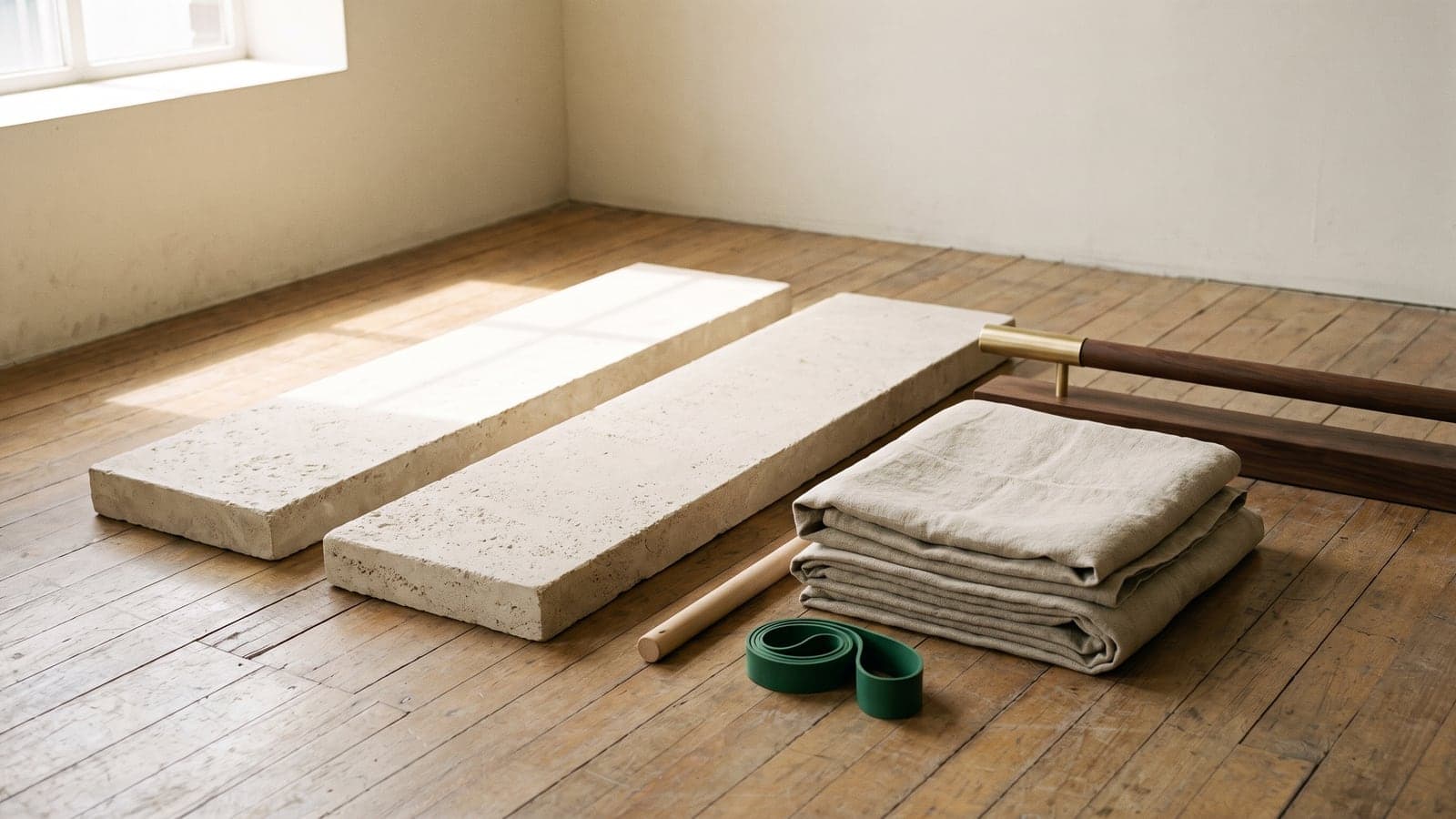
The most practical setting for a private movement session during a busy week is the one that removes the most friction from your schedule. The choice between an at-home session and a studio session in Manhattan depends less on the format of the practice itself and more on the logistics of the hour before and after the appointment. Comparing travel, preparation, and environment will clarify which option best fits the structure of a particular day.
Travel time and calendar buffers
A crowded calendar leaves little room for variables. The most significant logistical difference between a home and studio session is travel.
An at-home session has no travel time for the client. The instructor travels to your Manhattan residence, which means the appointment begins the moment the session is scheduled to start. This allows the session to fit into a tighter calendar block. If you have a hard stop for a work call or a family commitment, a home session eliminates the uncertainty of transit. You can move directly from the session into the next part of your day without accounting for a subway delay or street traffic.
A studio session requires building a buffer for travel. The time commitment includes the journey to and from the approved partner studio. For some, this travel provides a useful mental transition between work or home life and the session itself. It creates a clear boundary. For others, adding 30 to 60 minutes of transit time to a 60-minute appointment makes it difficult to schedule on a packed day. When considering a studio, look at the total time block required, not just the session duration.
To apply this, examine the calendar slot you have in mind. Is it a narrow opening between two other fixed appointments? An at-home session is likely the more reliable fit. Is there more flexibility, or could the travel time serve as a welcome break? A studio session becomes a more practical choice.
Preparation and personal space
The second factor is the environment itself and the preparation required to use it. Each setting offers a different kind of convenience.
For an at-home session, the client is responsible for providing a clear and reasonably private space. This does not require dedicated fitness equipment, but it does mean ensuring there is enough open floor area to move comfortably. It also involves managing potential interruptions from family, pets, or deliveries. The small amount of time needed to clear a space is a trade-off for the convenience of not leaving home. The session takes place in a familiar, private environment that is entirely your own.
A studio session requires no preparation from the client. The space is designed specifically for movement, and the environment is controlled. You arrive at a location that is ready for the session to begin immediately. This provides a distinct separation from the demands of a home or office. For individuals who find it difficult to switch off from work or family responsibilities when at home, the dedicated nature of a studio can help create a more focused atmosphere. Privacy is inherent to the one-to-one instruction, even within a shared building.
Consider your own environment and mindset. Is creating a quiet space at home a simple task, or does it add another layer of stress to your day? Does the idea of physically leaving your personal space make it easier to concentrate on the instruction?
Equipment access and session focus
While the instructor adapts the session to your goals in either setting, the available tools differ.
At home, the session will primarily use mat-based exercises and any small equipment the client may have. The instructor may also bring portable items. The focus is on movement principles that can be practiced with minimal apparatus, making it easier to continue elements of the practice on your own between sessions. This approach is highly adaptable and centers on using body weight and fundamental patterns of movement.
An approved partner studio provides access to a wider range of Pilates apparatus, such as the reformer, tower, and chair. This allows the instructor to incorporate exercises that use spring resistance and different planes of motion. For clients interested in working with specific equipment, the studio is the necessary choice. The displayed price for a studio session includes the required access to the space and its equipment, so there are no separate fees to consider.
It is important to note that one set of tools is not inherently better than the other. The choice of equipment is a component of the session plan, not the goal itself. An effective session is possible in both settings. The decision depends on whether your immediate interest involves apparatus-based work or a practice that relies more on the floor and portable props.
Making the choice: a practical comparison
To help with the decision, here is a direct comparison of the logistical factors for a crowded week.
| Factor | At-Home Session | Studio Session | | :------------------ | :------------------------------------------------------- | :---------------------------------------------------------------- | | Travel | None for the client. Removes transit variables. | Requires travel time to and from the studio. | | Preparation | Requires a clear, quiet space at home. | None for the client. The space is always ready. | | Environment | Familiar, private, but with potential home distractions. | Dedicated movement space, separate from home or work. | | Equipment | Mat-based work and portable equipment. | Access to a range of Pilates apparatus. | | Best fit for... | A very tight schedule with little buffer time. | A day with more flexibility or when a change of scene is helpful. |
This table can serve as a quick reference. The "best fit" is not a prescription, but a starting point based on common scheduling challenges. Your preference for privacy, focus, and equipment will also shape the right choice for any given week.
The decision for one week does not have to apply to the next. Many clients find that a combination of settings works best over time, choosing the location based on the demands of their changing schedule. The most sustainable practice is the one that integrates into your life as it is, not the one that requires a perfect calendar.
The next step is to consider which of these logistical points matters most to you right now. That answer can help guide your choice when planning your next private session.
Private instruction begins with your actual context.